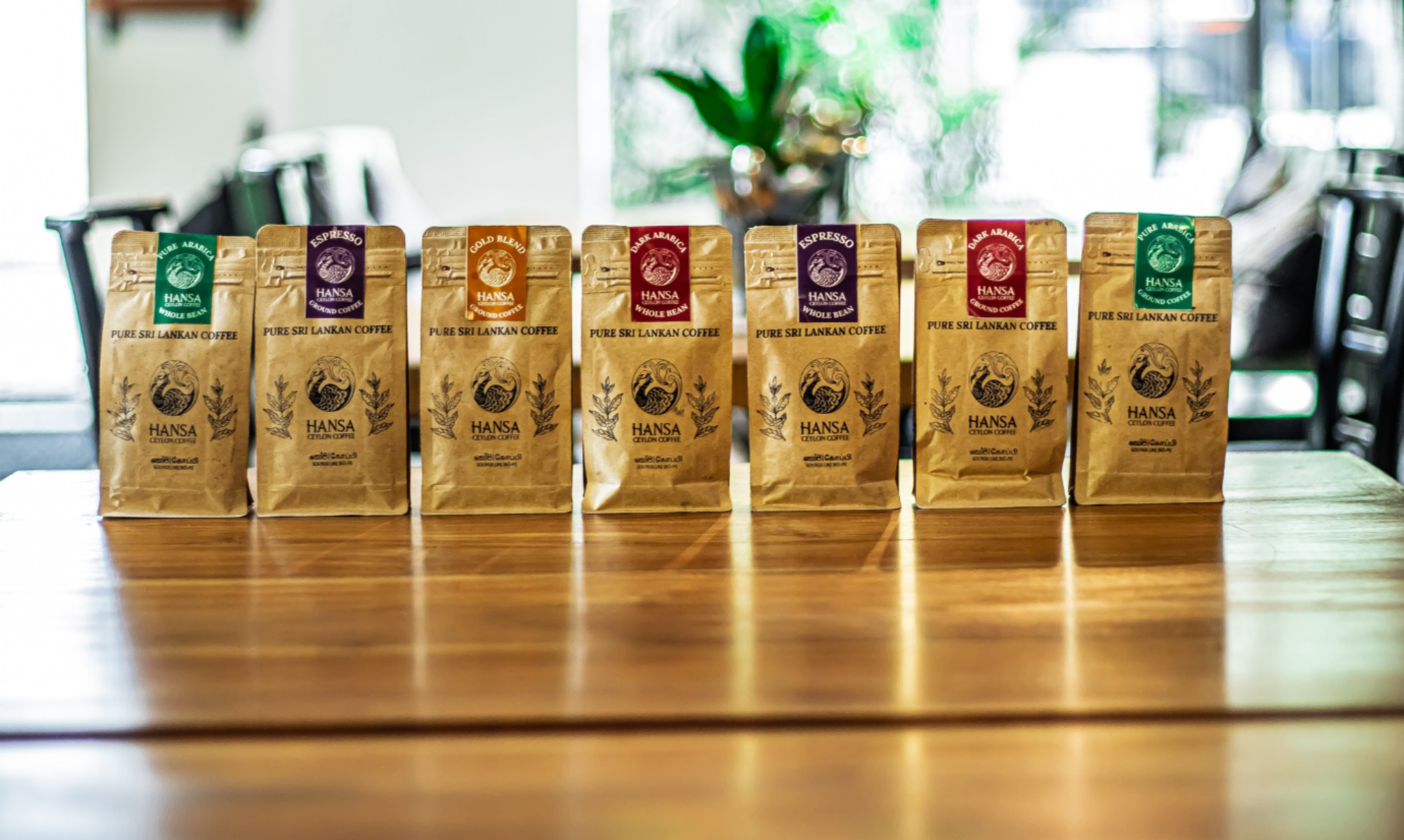
Hansa Coffee, a Sri Lankan specialty coffee company, has a history rooted in reviving the island’s coffee industry after a devastating blight. It all began in the mid-1990s when Harm van Oudenhoven from the Netherlands and Lawrence Goldberg from Seattle, USA, collaborated with a belief that good coffee could still be found in Sri Lanka. The operation first started with a small roaster in Nuwara Eliya and have since grown to produce high-quality Arabica and Robusta beans, focusing on sustainable practices and community partnerships.
Here’s a more detailed look at Hansa Coffee’s history :
Our Story
Sri Lanka wasn’t always a tea country. In the 1870s, it was the world’s largest coffee exporter — until a devastating leaf rust blight swept through the plantations in the 1880s, wiping out the industry almost entirely and pushing growers to switch to the crop that would define the island for the next century: tea.
For nearly a hundred years, the surviving coffee trees scattered across the hill country were treated as little more than shade cover — until one man got curious. In the mid-1990s, Dutch national Harm van Oudenhoven examined the characteristics of the coffee trees still growing wild in the region and became convinced of their potential. He was in Nuwara Eliya working on the Netherlands-backed Integrated Rural Development Project, and it was there that he crossed paths with Lawrence Goldberg, an American from Seattle who had moved to Sri Lanka to work with a local NGO. The Way to Coffee
Together, the two men shared a conviction: that good coffee could still be found on this tea-dominated island. What started as a five-kilo roaster in a garage in Nuwara Eliya grew, over the following decades, into Hansa Ceylon Coffee — Sri Lanka’s first specialty coffee operation in over 150 years.
Today, Hansa sources dry-processed Arabica and Robusta beans from forest gardens across the central highlands, working closely with local farmers to improve both quality and livelihoods. The roastery itself — a women-staffed operation in the small hill town of Ragala, sitting at over 1,600 metres — has become known for a cup tasters describe as smooth, chocolaty, and rich, with the region’s characteristic hint of black pepper. Day9
It’s a story of patience as much as coffee: reviving a nearly lost industry, one hand-sorted batch at a time.
- Early Days:Harm van Oudenhoven, involved in the Integrated Rural Development Project (IRDP) in Nuwara Eliya, partnered with Lawrence Goldberg, who was working for a local NGO.
- Inspiration: Hansa was inspired by Sri Lanka’s past as a coffee producer and the potential to revive the industry after a coffee leaf rust disease had shifted the focus to tea.
- Small Beginnings: Their initial operations were humble, starting with a five-kilo coffee roaster in a garage in Nuwara Eliya.
- Focus on Quality: Hansa Coffee emphasizes high-quality, dry-processed Arabica and Robusta beans, sourced from local forest gardens.
- Community Involvement: They’ve maintained a commitment to supporting farmers and fostering community partnerships.
- Expansion and Recognition: Hansa Coffee has expanded its reach, offering its products in supermarkets and its own factory.
- Unique Products: Besides coffee, their sister company Serendib Chocolates also produces high-percentage bean-to-bar chocolate products, including a 100% bean-to-bar cacao slab.
- International Presence: Hansa Coffee has gained recognition for its quality and flavor, with fans worldwide.